Our National Story: The Journey to the United Kingdoms of Tikar (UKT)
The story of the United Kingdoms of Tikar is one of resilience, suppressed sovereignty, and an unwavering belief in justice. It is a journey that reclaims not only our rights but our identity and dignity.
Colonial Foundations and Birth of Identity
From 1916 until the early 1950s, Southern Cameroons was administered under British trusteeship as part of Nigeria. This was not sovereignty—it was temporary administration, a fact later affirmed by both League and UN documents. True authority remained with the people.
On May 6, 1953, our elected representatives walked out of the Eastern Nigerian House of Assembly in Enugu. This was more than protest—it was the first act of self-determination. We declared: “We choose dignity not domination.” This walkout marked the political birth of our identity as Tikar.
Self-Governance Amid Rising Constraints
From 1954 to 1961, we built autonomous institutions: a local government, judiciary, civil service, and a functional democracy—all under British trusteeship with all rights preparing us for genuine independence.
Then, in the 1961 UN-supervised plebiscite, we were coerced into choosing between joining Nigeria or French Cameroun, with full independence conspicuously absent. We chose union under a federal vision, confident it would be one of equals.
The Foumban Deception & Void Union
The so-called Foumban Conference of 1961 was nothing but a facade. The “federal constitution” had been drafted in Yaoundé before the talks, leaving Southern Cameroons to accept terms without meaningful negotiation.
Worse, no treaty of union was ever signed or deposited at the UN. According to international law, that renders the union legally void — a truth our people must reclaim.
Dismantling of Federalism (1972) and Symbolic Erasure (1984)
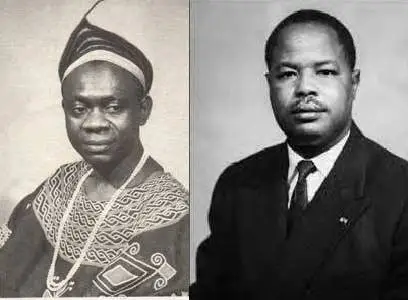
In 1972, President Ahmadou Ahidjo abolished the federal structure through a questionable referendum, nullifying all rights promised at unity.
By 1984, President Biya erased even the memory of our union by renaming the nation “Republic of Cameroon.” The silent removal of “United” and “Cameroons” from the name was more than symbolic — it erased our presence in history.
The 2016 Awakening
By 2016, decades of marginalization erupted in peaceful protests—teachers, lawyers, and youths demanding justice. The government retaliated with oppression, but instead of silencing us, they awakened our consciousness.
New generations rose, embracing our heritage and reclaiming our sovereignty, informed by history, law, and the truth about trusteeship and treaty voids.
Why the United Kingdoms of Tikar?
We do not seek revenge. We seek restoration.
The name UKT reflects our identity: a union of ancestral fondoms renewed under modern governance, grounded in the truth that sovereignty was never ceded.
We choose peace. We choose legitimacy.
This Is Not Secession — It Is Restoration
Our journey resembles those of Eritrea, South Sudan, and others. We are not breaking — we are rebuilding.
We stand on history, law, and justice. Sovereignty cannot be erased, only delayed.
Final Word
We ask not for permission.
We ask not for war.
We ask for dignity through truth.
We are not seceding — we are restoring.
We are not rebelling — we are remembering.
We are not running — we are rising.
demanded immediate independence and reunification of British and French Cameroons. They envisioned a sovereign, united, and anti-colonial Cameroon. Ahmadou Ahidjo, however, was deeply opposed to the UPC’s vision. While UPC leaders were being assassinatedUm Nyobè in 1958 and Moumié in 1960Ahidjo rose as France’s chosen leader, loyal to colonial interests. He became Prime Minister in 1958, and French Cameroun gained its independence in 1960, still tethered to France through secret military and economic agreements.
Many UPC fighters fled to neighboring countries, including Southern Cameroons, seeking refuge from French persecution. However, the UPC’s dream of a people-led, unified, independent Cameroon was cut short through assassinations, repression, and betrayal.
In 1961, Southern Cameroons joined French Cameroun under the agreed federal structure, believing in equality and self-rule. However, no formal union treaty was ever signed to seal that relationship a foundational flaw. At the time, the world was emerging from the Cold War, and peace was prioritized over legal precision, which is perhaps understandable in a broader geopolitical context.
Under the federal arrangement, it was understood that the presidency would rotate between Francophone and Anglophone zones. That has never happened to this day.
Ahidjo, who had opposed the UPC’s anti-French agenda, appropriated their call for unity to consolidate power. He cleverly appealed to Francophones many of whom had fled into Anglophone zones to support his narrative of “One Cameroon.”
On May 20, 1972, he unilaterally changed the federal structure into a unitary state, the United Republic of Cameroon, without Anglophone consent. This was a clear violation of the terms of the 1961 union and marked the beginning of systematic Anglophone marginalization.
The shift to a dictatorship had begun. Two versions of history emerged:
-
In Francophone schools, students were taught the myth of a naturally united Cameroon.
-
In Anglophone schools, the history of the union and its violated terms were emphasized.
This deliberate historical divide bred mutual distrust. Whenever Anglophones raised concerns, they were seen as troublemakers. Meanwhile, the regime claimed it was “preserving peace,” a tactic reminiscent of Hitler, who rewrote German history to manipulate the people and lead them into war.
Ahidjo eventually stepped down and died in exile in Dakar, Senegal, alongside his wife.
His successor, Paul Biya, came to power and in 1984, renamed the country from “United Republic of Cameroon” to **“Republic of Cameroon”**the name French Cameroun had before reunification. This act symbolically erased Southern Cameroons from the union entirely.
Whenever this issue is raised, the government responds with brute force rather than dialogue. From 1916 to today, this is why Anglophones have now said: “If you don’t want us in this union, we will go our separate way.”
Paul Biya’s regime has not only inflicted pain on Anglophones; Francophones too have suffered for over six decades. Under the slogan “One Cameroon,” thousands of young Francophones have been sent to die in Anglophone zones, while Biya and his inner circle enjoy lives of luxury.
This system is propped up by a small group of loyalists, enriched at the expense of the people. Meanwhile, both Francophones and Anglophones flee abroad in search of opportunity. One man from the West Region told me he would never return to Cameroon to do business because of the regime’s oppressive policies.
Paul Biya will not rule forever. We must look ahead to the next 50 years. Africa is still young in its development. No African leader today has shown the capacity to successfully manage a bilingual nation under the current system.
The best way forward is to create two nations:
Like Senegal and The Gambia, we can separate peacefully and remain friends and neighbors. Mixed families can choose where they want to live. We can trade, share ideas, and help each other prosper.
Both Francophones and Anglophones have been betrayed by two dictators who served French interests for more than 60 years. We still use the CFA franc, sign military deals with France, and suffer under neocolonial restrictions.
It is time for the scales to fall from our eyes. Let us see clearly who the true enemy is and never be deceived again. Let us restore hope and leave a true legacy for our children and their children.
We are not seceding we are restoring a sovereignty that existed before this broken arrangement.
For these reasons, we now establish the United Kingdoms of Bamenda, a free, independent, and peaceful Anglophone nation.
Let this message be clear to Francophones and Anglophones alike:
God has not forgotten us. The future is bright. We have tried federalism, it failed. There is no need to return to what was already destroyed. Let the myth of “One Cameroon” be exposed.
We are ready for the transition. Any help in this process is welcome.