National Symbols of the United Kingdoms of Tikar
Every nation carries its soul through symbols. These are not just designs or colors, but stories in themselves — reminders of where we have come from, what we have endured, and where we are going. For the United Kingdoms of Tikar, our symbols unite our kingdoms, honor our ancestors, and inspire our children.
The National Flag
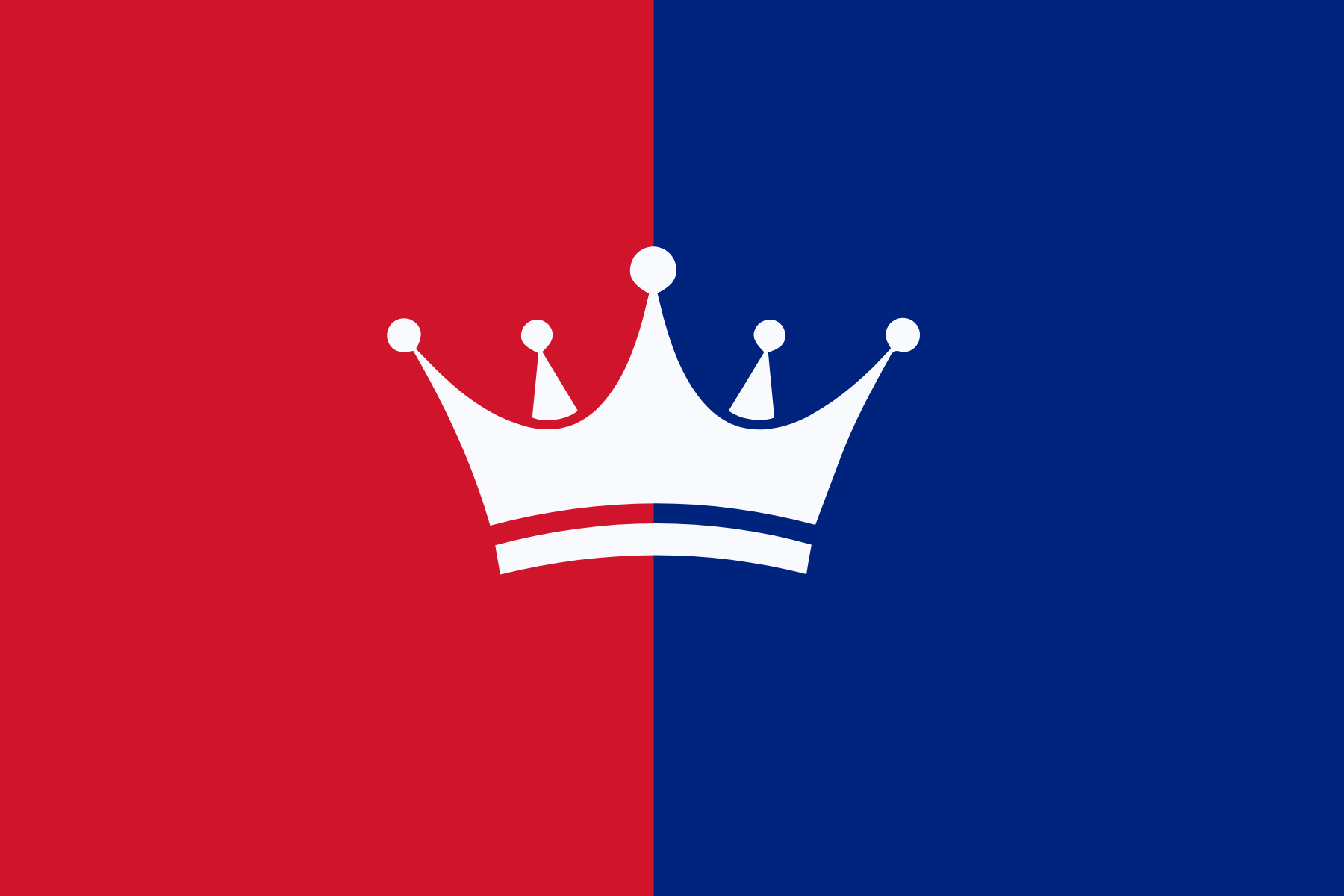
The flag of the United Kingdoms of Tikar is more than a banner. It is the living emblem of unity, royalty, and resilience.
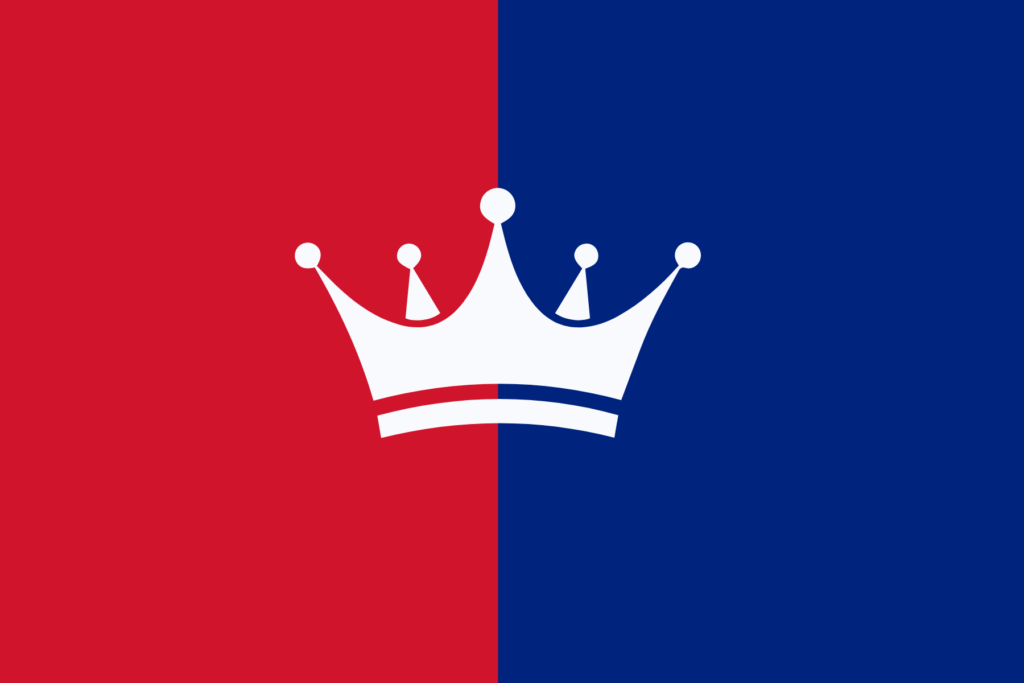
Two equal vertical bands stretch across the flag: crimson red on one side, royal blue on the other. At the very center shines a bold white crown, standing as a mark of indigenous leadership, dignity, and the authority of the people.
Crimson red reminds us of the sacrifice and struggle of those who gave their lives for justice and freedom. It speaks of the blood shed across centuries — in slave raids, on plantations, and under oppressive regimes — all endured so that future generations could stand free.
Royal blue represents peace, wisdom, and trust. It is the color of calm strength, reflecting our determination to rebuild a harmonious society. Even after centuries of betrayal and hardship, blue reminds us that we are a people of resilience and vision.
The crown at the center ties together our many kingdoms and fondoms. It honors traditional rulers who safeguarded our heritage and also affirms the sovereignty of the people. The crown is not merely a symbol of power but of dignity, unity, and continuity.
National Symbols of the United Kingdoms of Tikar (Part II)
Every nation is carried forward by the strength of its symbols. Where the flag waves as our banner of unity, the anthem and coat of arms breathe life into our collective spirit. They tell the world not only who we are, but why we endure.
The National Anthem
The national anthem of the United Kingdoms of Tikar is more than a song — it is a sacred declaration of hope, sovereignty, and rebirth.
Its verses recall the ancestral pain of colonization and the betrayals of broken promises. It does not hide our history of suffering, yet it transforms that pain into strength. Each note proclaims the dignity of a people who refuse to remain silent, who have risen from oppression to claim their rightful place in the world.
The anthem is sung in both English and Pidgin, reflecting our commitment to inclusion. By embracing our diverse linguistic and cultural identity, it ensures that every citizen — from the royal courts of the highlands to the farms and towns of the nation — can raise their voice in unity.
Whenever it is sung, the anthem inspires courage. It is a reminder to our people that they have reclaimed their voice, and a declaration to the world that the Tikar are marching forward with dignity, justice, and unbreakable resolve.
The National Emblem (Coat of Arms)
If the anthem gives us a voice, the emblem gives us a face. The national emblem of the United Kingdoms of Tikar stands as a proud representation of our heritage, our vigilance, and our destiny.
At its heart rests a white crown, the timeless symbol of indigenous leadership and sovereignty. This crown does not belong to one man or one kingdom — it belongs to the people, and through it, the authority of our traditions is preserved.
Beneath the crown, two interlocking shields represent both the defense of our ancestral heritage and the protection of our future. They remind us that sovereignty is safeguarded not only by courage but also by unity.
Behind them rise three spears, standing tall as guardians of vigilance, tradition, and justice. They affirm that while we are a people of peace, we are also prepared to defend our dignity against any threat.
Below the emblem flows a banner bearing three words:
“Dignity, Liberty, Unity.”
This is the national creed of the Tikar people. Dignity — because we refuse to live in shame or erasure. Liberty — because freedom is our birthright. Unity — because only together can we build a nation that endures.
The coat of arms ties together both the ancient and the modern. It honors the fondoms and leadership structures of the Tikar grassfields, while at the same time affirming our commitment to a democratic and united society.
The National Map (IV)
The map of the United Kingdoms of Tikar is more than a set of borders — it is the story of a homeland. It outlines the seven major divisions that together form our federation:
Each of these regions is a kingdom in its own right, rich in heritage, language, and cultural traditions. Yet, they are united by a shared struggle and a common destiny.
The map also highlights our geographical treasures:
Lake Nyos and Lake Wum — natural wonders that carry both beauty and memory.
Menchum and Kumbi Rivers — lifelines of our land, flowing with vitality.
The Mahand and Mambilla Plateaus — highlands that stand as both shield and sanctuary for our people.
When our national flag is placed upon this map, it does not merely mark territory. It affirms our territorial identity, our cultural sovereignty, and our enduring right to self-rule.
Cultural Meaning
Taken together, the symbols of the United Kingdoms of Tikar are not just images to be displayed; they are living truths that carry the spirit of our people.
They link tradition to vision, ensuring that the wisdom of our ancestors guides the innovation of our future.
They honor the elders while empowering the youth, passing the torch of leadership from generation to generation.
They acknowledge the pain of our past while defining the sovereignty of our path forward.
These symbols are our testimony. They declare that we are not a people erased, but a people restored. They remind us and the world that dignity, liberty, and unity are not abstract ideals, but the foundation on which the Tikar stand.
Our flag, anthem, emblem, and map form the language of our sovereignty. They are an invitation to the world to recognize us not as subjects of another’s history, but as equals who have reclaimed their place in history.